

Introduction
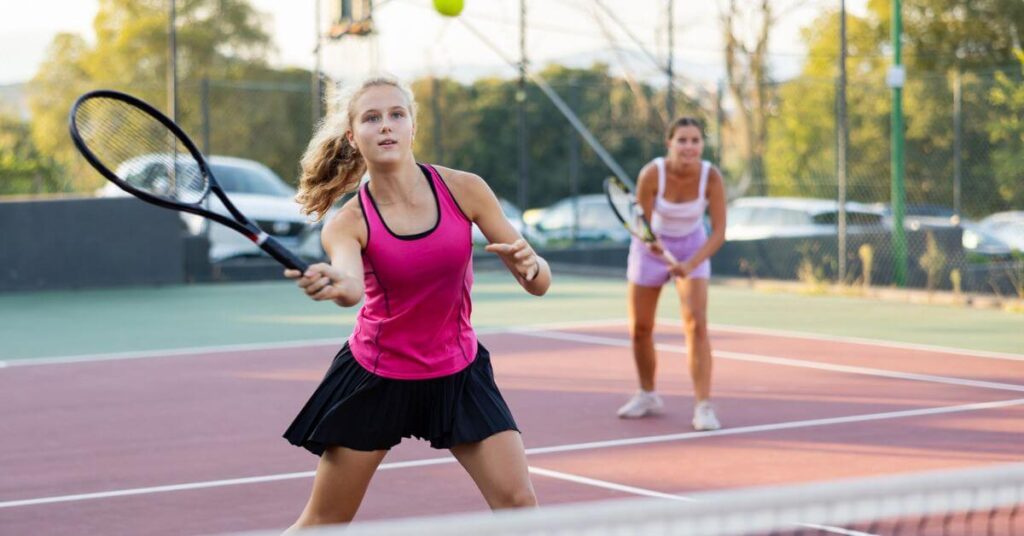
Doubles tennis brings a different dimension to the sport by combining teamwork, communication, and strategic coordination. Unlike singles, where individual skill dominates, doubles success depends heavily on how well two players function as a unit. Understanding positioning, roles, and tactics is essential to gaining a competitive edge.
Understanding the Basics of Doubles Tennis
In doubles, each team consists of two players, and the court is wider due to the use of alleys.
Key Differences from Singles
- Wider court coverage
- Faster-paced rallies
- Greater emphasis on net play
- Strong reliance on communication
Court Positioning in Doubles
Positioning is the backbone of effective doubles play.
Common Formations
1. One Up, One Back
- One player at the net, one at the baseline
- Ideal for beginners
- Provides balanced coverage
2. Both at the Net
- Aggressive formation
- Puts pressure on opponents
- Requires quick reflexes
3. Both at the Baseline
- Defensive setup
- Useful against strong net players
- Limits attacking opportunities
Tip: Transitioning quickly from defense to offense is key to winning points.
Essential Doubles Strategies
1. Control the Net
The team that dominates the net usually controls the match.
Why it works:
- Shorter reaction time for opponents
- More opportunities for volleys and put-away shots
2. Effective Serving and Returning
Serving in doubles is not just about power—it’s about placement.
Key tactics:
- Target the opponent’s weaker side
- Use wide serves to open angles
- Aim returns low to the net player’s feet
3. Poaching
Poaching involves the net player intercepting the ball intended for their partner.
Benefits:
- Disrupts opponents’ rhythm
- Creates winning opportunities
Important: Timing and communication are crucial to avoid confusion.
4. Communication Between Partners
Strong communication builds trust and coordination.
Effective communication includes:
- Calling shots clearly
- Using hand signals before serves
- Encouraging each other during matches
Team Dynamics and Roles
Defining Roles
Successful teams often assign roles based on strengths.
- Aggressive player: Controls the net and finishes points
- Consistent player: Maintains rallies from the baseline
Building Chemistry
Chemistry between partners can make a huge difference.
Ways to improve team dynamics:
- Practice together regularly
- Understand each other’s playing style
- Stay positive and supportive
Movement and Coordination
Doubles requires synchronized movement.
Key principles:
- Move as a unit (left or right together)
- Maintain proper spacing
- Avoid leaving gaps on the court
Golden rule: Never let the middle of the court become an easy target.
Common Mistakes in Doubles Tennis
- Poor communication between partners
- Both players chasing the same ball
- Staying too far back from the net
- Ignoring opponent positioning
- Lack of strategy during serves and returns
Avoiding these mistakes can significantly improve performance.
Advanced Doubles Tactics
1. Australian Formation
- Server’s partner stands on the same side as the server
- Forces opponents to adjust their return angles
2. I-Formation
- Net player crouches in the center
- Confuses the returner about positioning
These formations are often used at higher levels to gain a tactical advantage.
Mental Approach in Doubles
Mental strength is equally important in doubles.
Focus areas:
- Trust your partner
- Stay composed under pressure
- Maintain a positive attitude
A strong mindset helps teams recover quickly from mistakes.
Conclusion
Doubles tennis is a dynamic blend of strategy, teamwork, and skill. Mastering positioning, communication, and coordination can transform two individual players into a powerful team. By understanding each other’s strengths and working together effectively, players can dominate the court and enjoy the game at a deeper level.
FAQs
1. What is the most important skill in doubles tennis?
Communication and teamwork are the most critical factors for success.
2. Why is net play important in doubles?
Controlling the net allows players to finish points quickly and apply pressure.
3. How can partners improve coordination?
Practice together, communicate clearly, and develop a shared strategy.
4. What is poaching in doubles tennis?
It’s when the net player intercepts a shot meant for their partner.
5. Which formation is best for beginners?
The one up, one back formation is easiest to learn and most balanced.
6. How do you handle disagreements during a match?
Stay calm, communicate respectfully, and focus on the next point.
7. Can two players with different styles succeed as a team?
Yes, complementary styles often create a strong and balanced partnership.


